import numpy as np
import torch, rasterio
from pathlib import Path
from dataclasses import dataclass, field
from typing import Dict, List, Tuple
# ─── Spectral indices ───────────────────
def ndvi(nir: np.ndarray, red: np.ndarray) -> np.ndarray:
return (nir-red) / (nir+red+1e-6)
def ndre(nir: np.ndarray, re: np.ndarray) -> np.ndarray:
return (nir-re) / (nir+re+1e-6)
def cwsi(v: float, t=0.3) -> float:
return float(np.clip(1-v/t, 0, 1))
# ─── Data structures ────────────────────
@dataclass
class FieldZone:
zone_id: str
ndvi: float
ndre: float
cwsi: float
risk: str = "nominal"
alerts: List[str] = field(default_factory=list)
# ─── Analyser class ─────────────────────
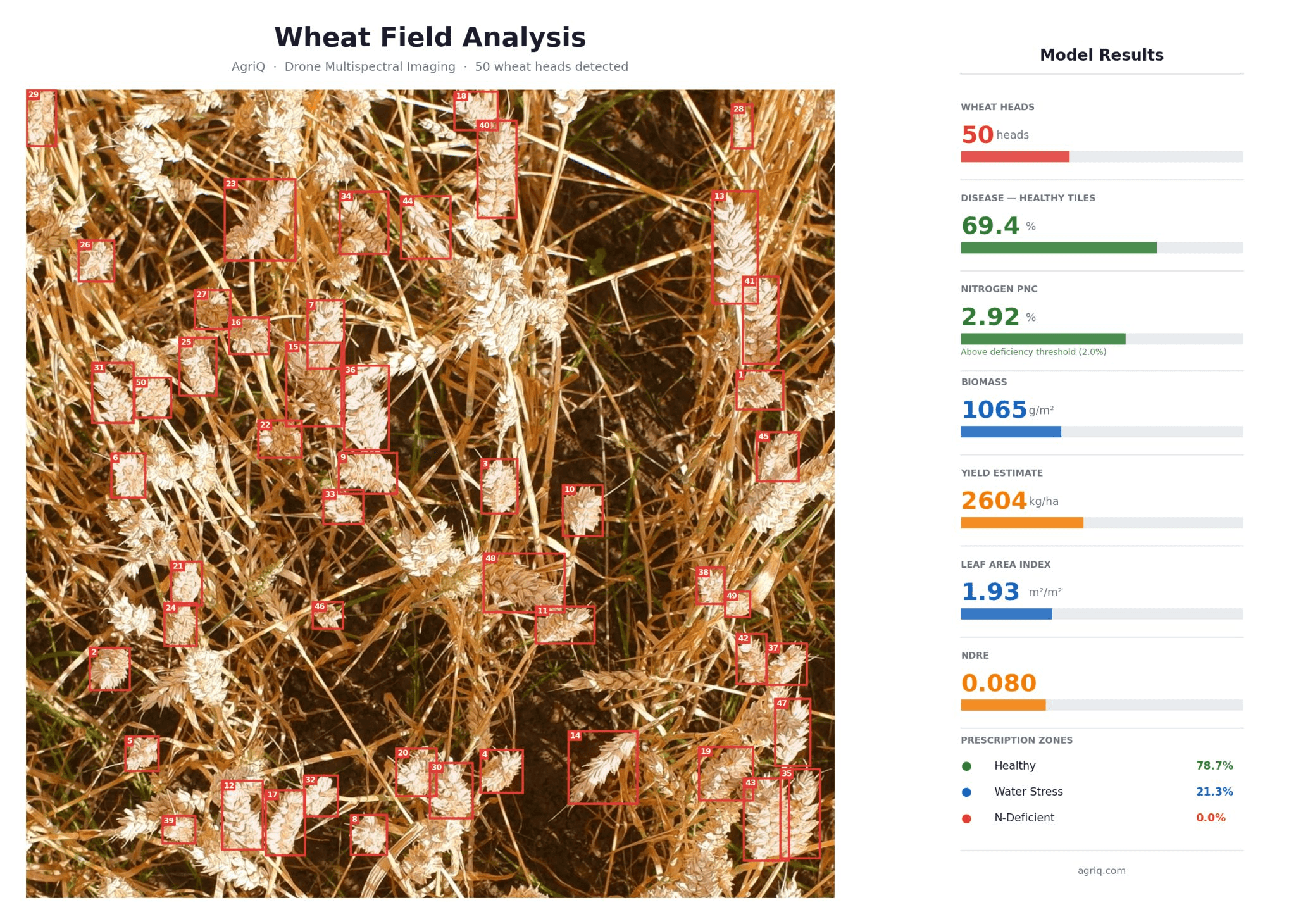
class CropHealthAnalyser:
def __init__(self, model_path: Path):
self.model = torch.load(model_path)
self.model.eval()
self.zones: List[FieldZone] = []
def load_bands(self, p: Path) -> Dict:
with rasterio.open(p) as src:
b = src.read().astype(np.float32)
return {"r":b[0],"g":b[1],"nir":b[3],"re":b[4]}
def analyse(self, p: Path) -> List[FieldZone]:
bd = self.load_bands(p)
nv = ndvi(bd["nir"], bd["r"])
nr = ndre(bd["nir"], bd["re"])
cw = cwsi(float(nv.mean()))
masks = self._segment(nv)
for i, m in enumerate(masks):
zn = float(nv[m].mean())
zr = float(nr[m].mean())
rk = "high" if zn < 0.25 else "low"
z = FieldZone(f"Z{i:02d}", zn, zr, cw, rk)
if rk == "high":
z.alerts.append("Disease risk")
self.zones.append(z)
return self.zones
def _segment(self, ndvi_map):
# Spatial clustering on NDVI surface
t = torch.from_numpy(ndvi_map)
return self.model(t.unsqueeze(0))
def prescription(self) -> Dict:
return {z.zone_id: z.risk for z in self.zones}
# ─── Run ────────────────────────────────
if __name__ == "__main__":
a = CropHealthAnalyser(Path("model.pt"))
res = a.analyse(Path("field.tif"))
pmap = a.prescription()
for zid, rk in pmap.items():
print(f"{zid}: {rk}")
import numpy as np
import torch, rasterio
from pathlib import Path
from dataclasses import dataclass, field
from typing import Dict, List, Tuple
# ─── Spectral indices ───────────────────
def ndvi(nir: np.ndarray, red: np.ndarray) -> np.ndarray:
return (nir-red) / (nir+red+1e-6)
def ndre(nir: np.ndarray, re: np.ndarray) -> np.ndarray:
return (nir-re) / (nir+re+1e-6)
def cwsi(v: float, t=0.3) -> float:
return float(np.clip(1-v/t, 0, 1))
# ─── Data structures ────────────────────
@dataclass
class FieldZone:
zone_id: str
ndvi: float
ndre: float
cwsi: float
risk: str = "nominal"
alerts: List[str] = field(default_factory=list)
# ─── Analyser class ─────────────────────
class CropHealthAnalyser:
def __init__(self, model_path: Path):
self.model = torch.load(model_path)
self.model.eval()
self.zones: List[FieldZone] = []
def load_bands(self, p: Path) -> Dict:
with rasterio.open(p) as src:
b = src.read().astype(np.float32)
return {"r":b[0],"g":b[1],"nir":b[3],"re":b[4]}
def analyse(self, p: Path) -> List[FieldZone]:
bd = self.load_bands(p)
nv = ndvi(bd["nir"], bd["r"])
nr = ndre(bd["nir"], bd["re"])
cw = cwsi(float(nv.mean()))
masks = self._segment(nv)
for i, m in enumerate(masks):
zn = float(nv[m].mean())
zr = float(nr[m].mean())
rk = "high" if zn < 0.25 else "low"
z = FieldZone(f"Z{i:02d}", zn, zr, cw, rk)
if rk == "high":
z.alerts.append("Disease risk")
self.zones.append(z)
return self.zones
def _segment(self, ndvi_map):
# Spatial clustering on NDVI surface
t = torch.from_numpy(ndvi_map)
return self.model(t.unsqueeze(0))
def prescription(self) -> Dict:
return {z.zone_id: z.risk for z in self.zones}
# ─── Run ────────────────────────────────
if __name__ == "__main__":
a = CropHealthAnalyser(Path("model.pt"))
res = a.analyse(Path("field.tif"))
pmap = a.prescription()
for zid, rk in pmap.items():
print(f"{zid}: {rk}")